
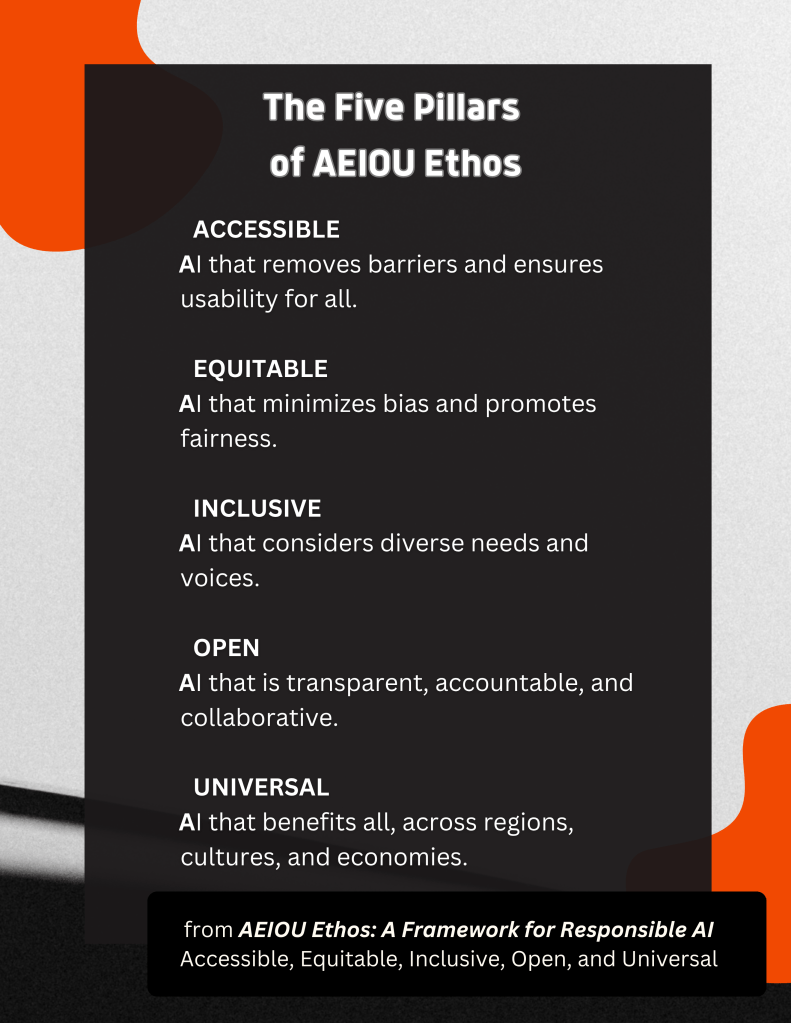
The AEIOU Ethos, introduced in AEIOU Ethos: A Framework for Responsible AI, provides a structured approach to making AI Accessible, Equitable, Inclusive, Open, and Universal. As AI systems continue to shape our world, these principles serve as a foundation for building technology that truly serves humanity.
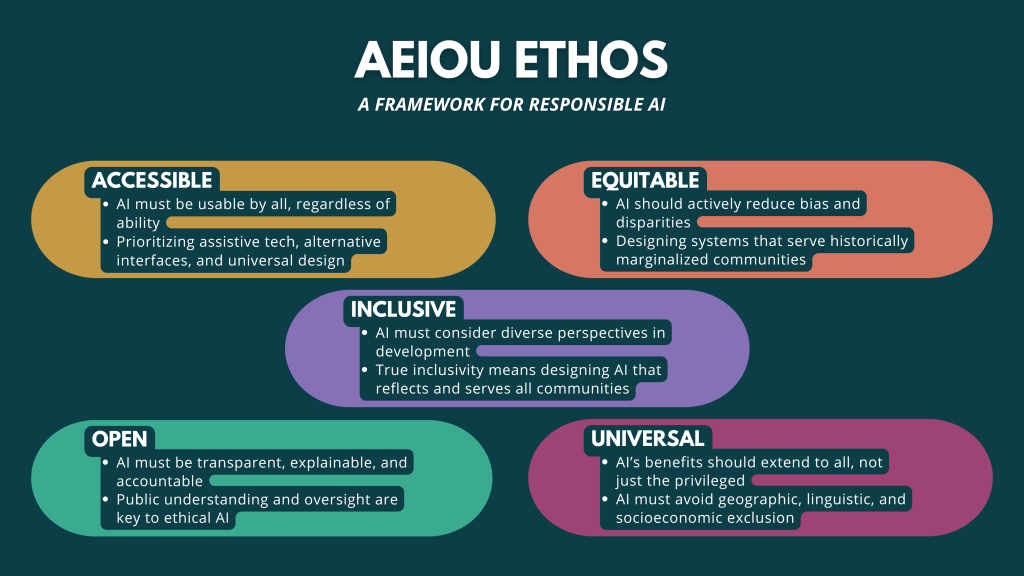
To help visualize these principles, I’ve created an infographic that breaks down the AEIOU framework into a concise, easy-to-reference format. Whether you’re an AI developer, policymaker, researcher, or simply an advocate for responsible AI, this guide is designed to help you implement ethical AI practices.
📌 The Five Pillars of AEIOU Ethos
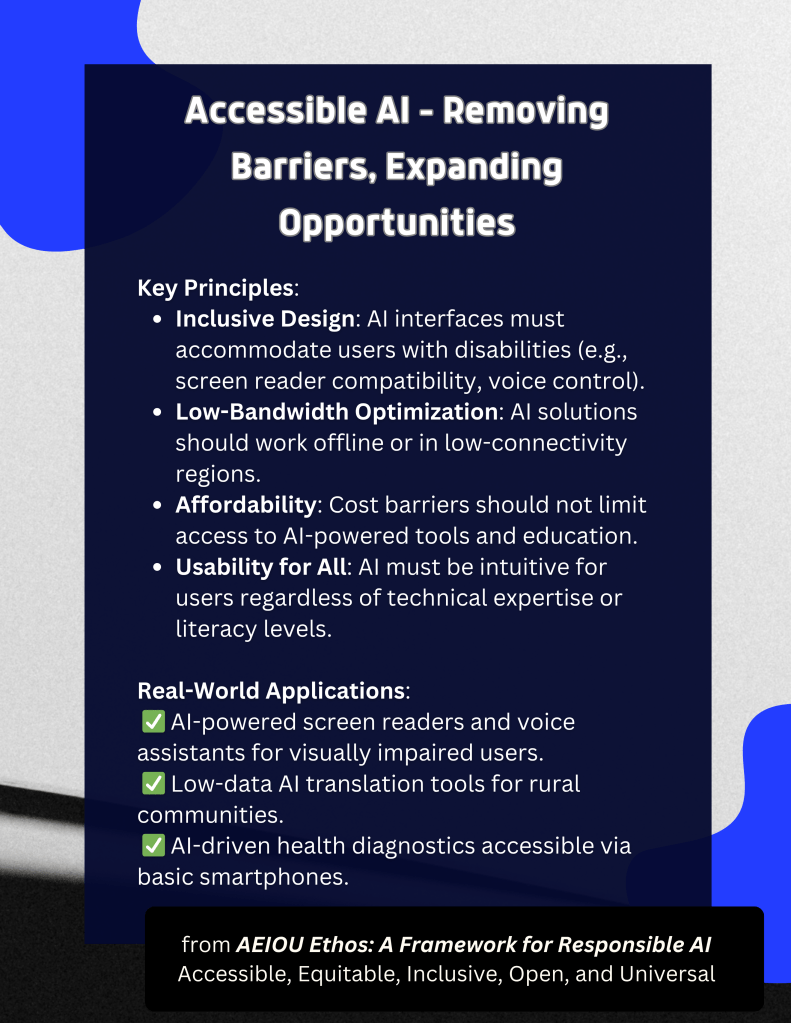
1️⃣ Accessible
- AI must be usable by all, regardless of ability.
- Prioritizing assistive tech, alternative interfaces, and universal design.
2️⃣ Equitable
- AI should actively reduce bias and disparities.
- Designing systems that serve historically marginalized communities.
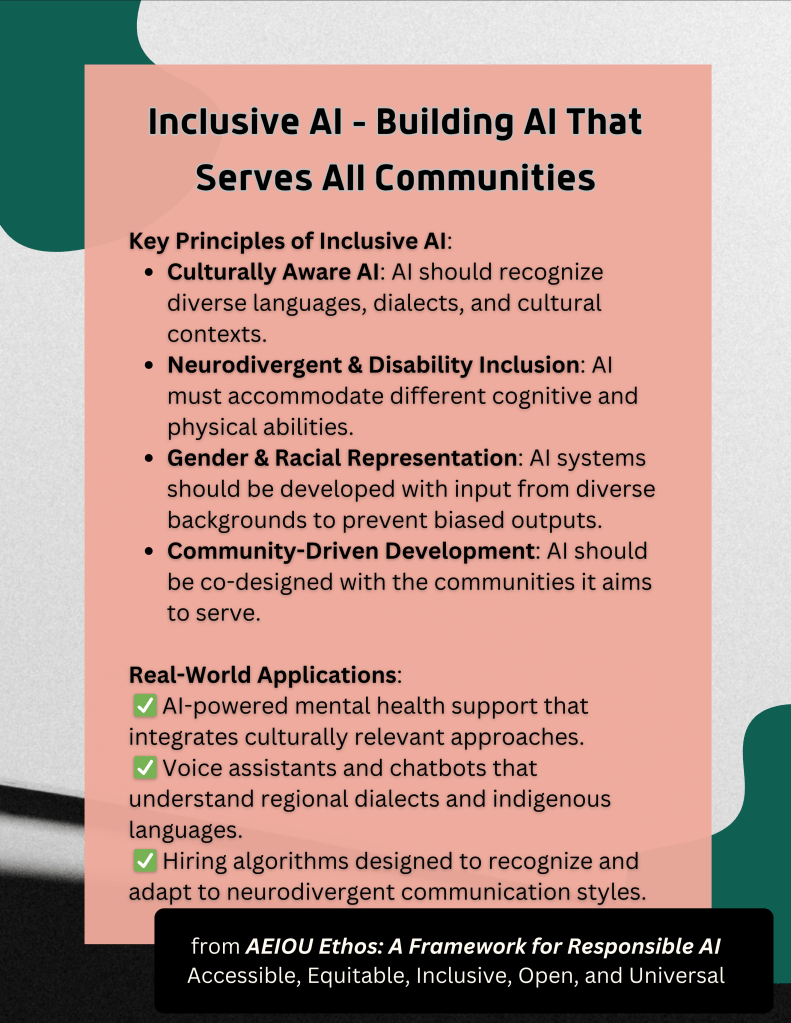
3️⃣ Inclusive
- AI must consider diverse perspectives in development.
- True inclusivity means designing AI that reflects and serves all communities.
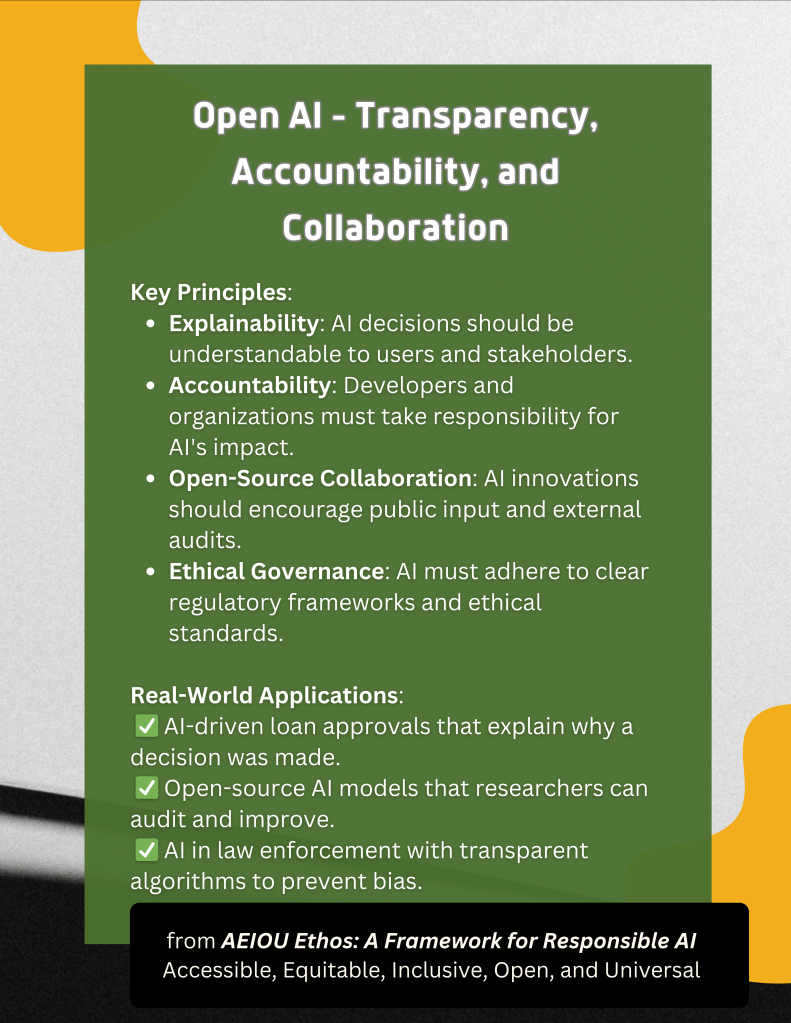
4️⃣ Open
- AI must be transparent, explainable, and accountable.
- Public understanding and oversight are key to ethical AI.
5️⃣ Universal
- AI’s benefits should extend to all, not just the privileged.
- AI must avoid geographic, linguistic, and socioeconomic exclusion.
📌 Check out the infographics below.

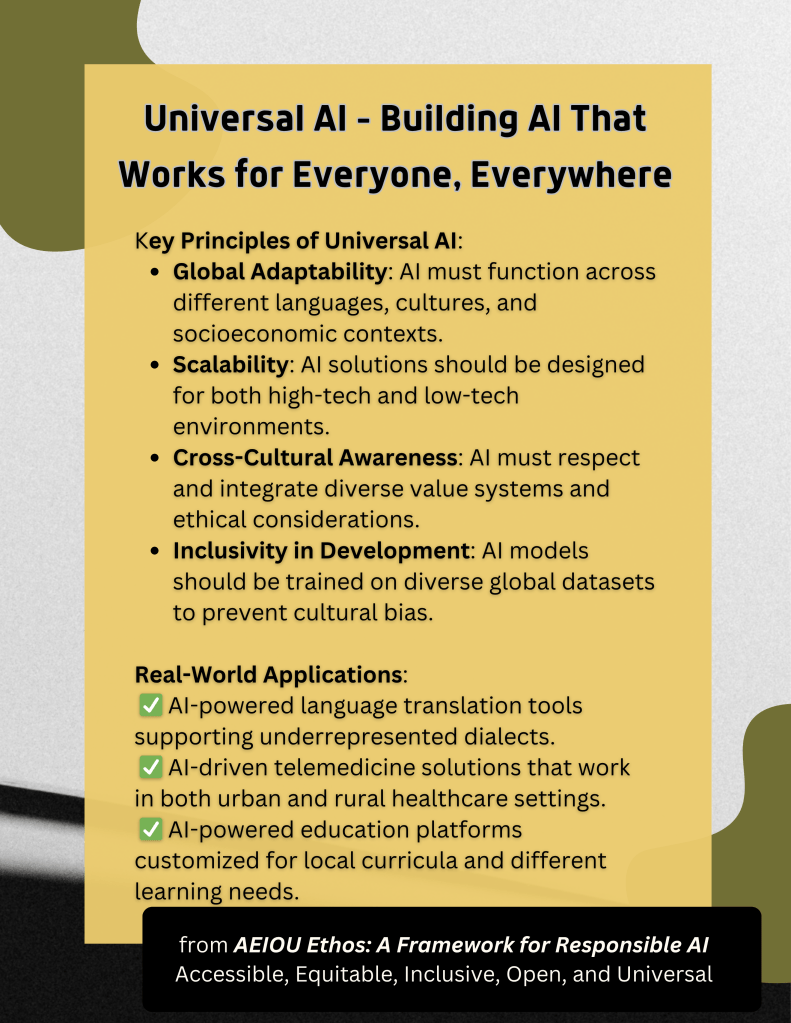
The AEIOU Ethos is more than a framework—it’s a call to action. By embedding these principles into AI development, we can build technology that is ethical, inclusive, and beneficial for all.
Bringing Responsible AI to Life with AEIOU Ethos
The AEIOU Ethos isn’t just a framework—it’s a call to action. To build AI that truly serves everyone, we must prioritize accessibility, equity, inclusivity, openness, and universality at every stage of development.
If you’re passionate about shaping ethical, human-centered AI, dive deeper into AEIOU Ethos: A Framework for Responsible AI. The book provides a comprehensive guide to implementing these principles, offering real-world insights for developers, policymakers, and organizations committed to responsible AI.

 Joni Gutierrez, Ph.D.
Leave a comment