
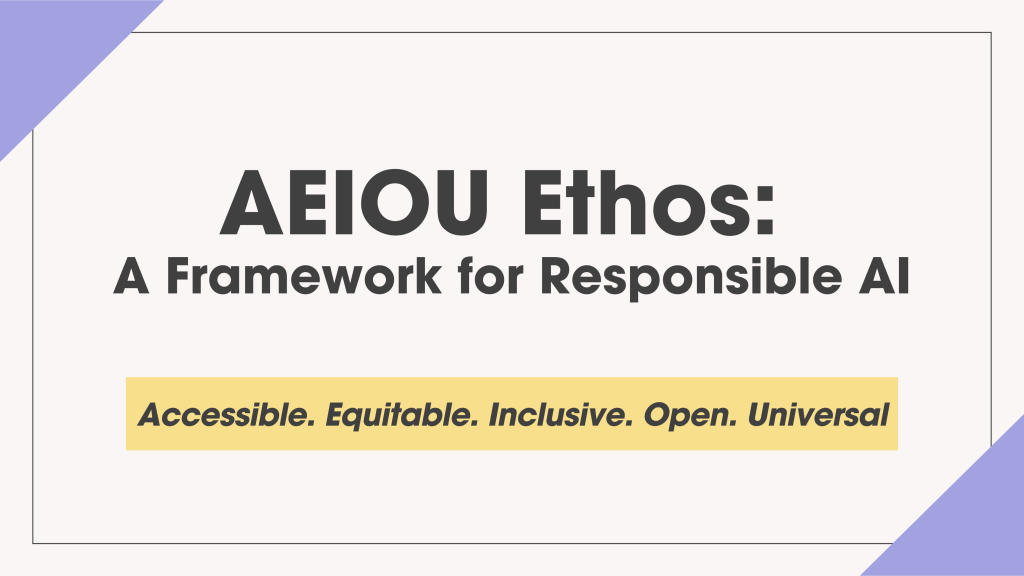
Welcome to AEIOU Ethos: A Framework for Responsible AI. This is a human-centered approach to designing and deploying ethical, inclusive, and impactful artificial intelligence.
Why Responsible AI?
Artificial intelligence is transforming every part of our lives—how we work, learn, communicate, and make decisions. But without careful guidance, AI risks deepening inequalities, reinforcing bias, and excluding the people who need it most. Responsible AI isn’t optional. It’s essential to ensure technology serves the needs of all humanity, not just a privileged few.

AEIOU Ethos
The AEIOU Ethos is a practical framework for developing responsible AI. It stands for Accessible, Equitable, Inclusive, Open, and Universal. These five pillars offer a clear roadmap for building AI systems that empower people, protect human rights, and promote fairness and transparency. Together, they form a holistic guide for ethical AI that works for everyone, everywhere.

Accessible AI
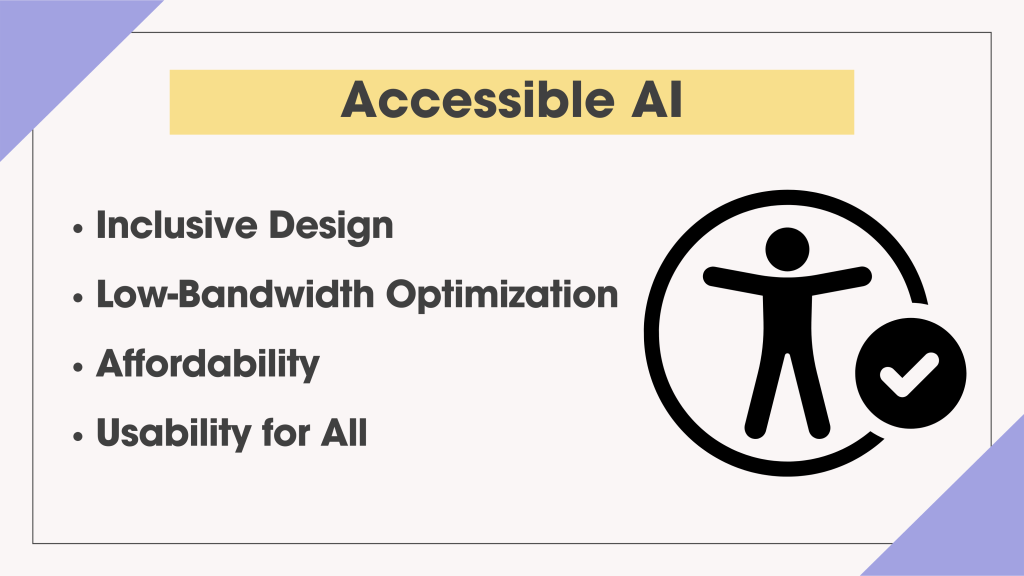
Accessible AI removes barriers—whether they are physical, economic, or technological. This means AI should work for people with disabilities, for those in rural areas with limited internet, and for communities who can’t afford high-end devices. For example, an AI-powered health diagnostic app that runs offline on a basic smartphone can help communities without access to clinics. Accessible AI makes technology intuitive and affordable, ensuring that everyone has a fair opportunity to benefit from innovation.
Equitable AI
Equitable AI actively reduces bias and ensures fairness in outcomes. Too often, AI systems reflect historical inequalities found in the data they are trained on. Equitable AI is designed to challenge that. For instance, hiring algorithms should be tested and audited to prevent discrimination based on gender, race, or socioeconomic status. In healthcare, AI diagnostic tools should be trained on diverse populations to deliver accurate results for everyone. Equitable AI levels the playing field and promotes justice in every decision AI makes.

Inclusive AI
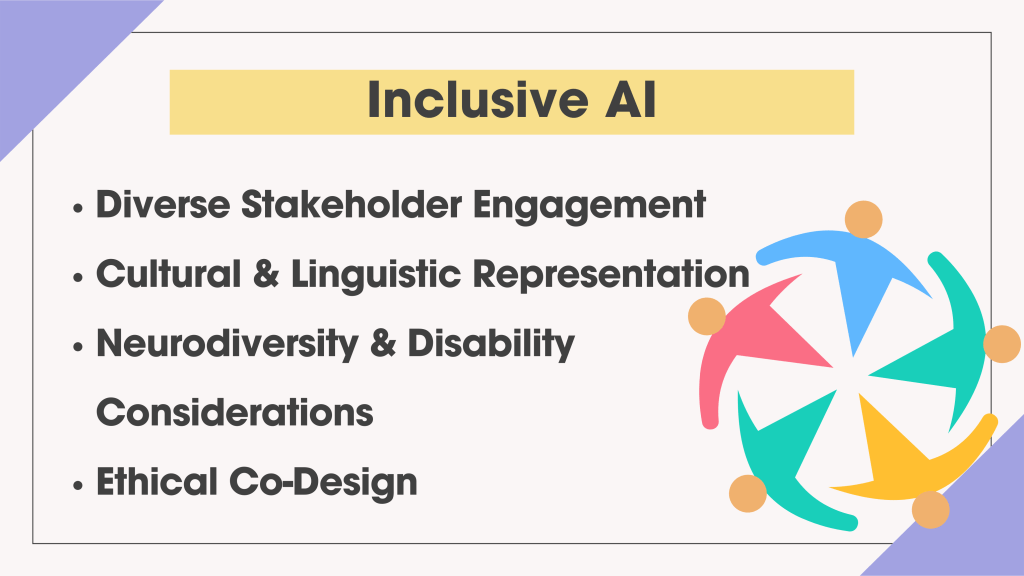
Inclusive AI means developing technology with a broad range of perspectives and experiences in mind. AI should reflect the cultures, languages, and needs of different communities—not just those of the dominant group. For example, AI language tools should support indigenous and underrepresented languages. Neurodivergent and disabled users should be included in the design process for AI learning platforms and public services. Inclusive AI ensures that no voice is left out and that technology serves everyone with dignity and respect.
Open AI
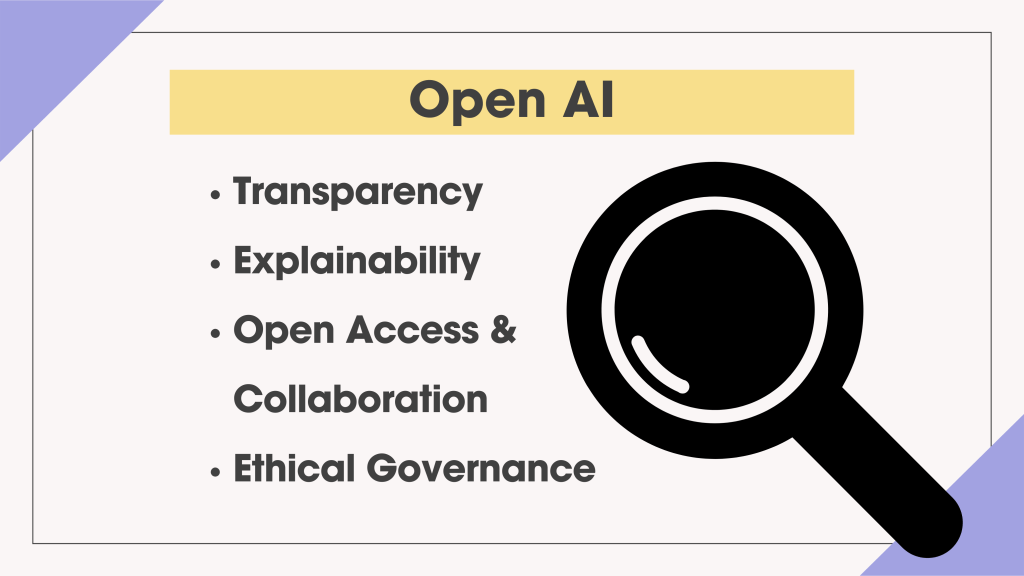
Open AI is transparent, accountable, and collaborative. People deserve to understand how AI systems make decisions—whether it’s approving a loan, diagnosing an illness, or selecting job candidates. Openness means providing clear explanations, sharing AI models for public audit, and inviting collaboration from researchers and communities. Open AI builds trust, prevents abuse, and makes technology safer and more reliable for everyone.
Universal AI
Universal AI is designed to work for everyone, everywhere. It addresses the needs of people in different cultures, economies, and environments. AI education tools should adapt to regional languages and local customs. Healthcare AI should diagnose both urban diseases and conditions common in remote or underserved areas. Universal AI ensures that no community is excluded from the benefits of AI, promoting global equity and inclusion.

Five Pillars
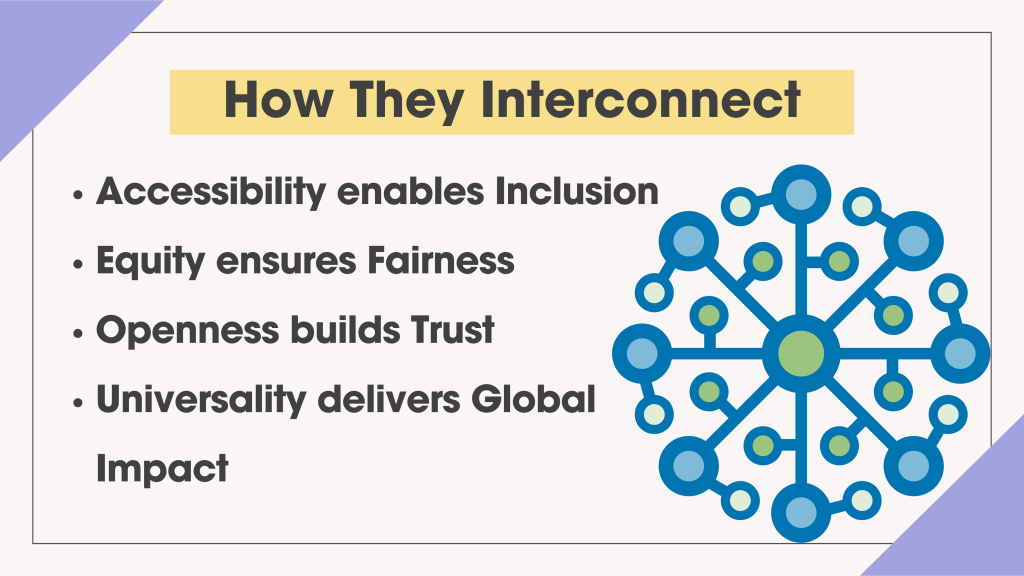
These five pillars—Accessible, Equitable, Inclusive, Open, and Universal—are deeply connected. An AI system that is accessible but not equitable can still reinforce bias. An inclusive AI that lacks transparency can still lose public trust. The AEIOU Ethos ensures that each of these principles works together to create AI that is ethical, effective, and truly human-centered.
Responsible AI is Essential
The decisions we make today about AI will shape our world for generations to come. By adopting the AEIOU Ethos, we choose to create AI that empowers, includes, and protects all people. Let’s build AI that reflects our shared values and helps us create a fairer, more inclusive future.

 Joni Gutierrez, Ph.D.
Leave a comment