
AI Cinematic Realism is a new framework for understanding realism in AI‑generated cinema—one that moves beyond camera‑based standards and focuses instead on emotional truth, narrative coherence, and the unique grammar of synthetic imagery. This video introduces the core ideas, principles, and philosophical commitments that define the field.
This page presents the video overview of AI Cinematic Realism, along with a full transcript and accompanying slide images. The video is based on the concepts developed in my book, AI Cinematic Realism (2026), and offers an accessible entry point into the framework. It is designed for students, educators, and creators exploring the shift from photographic truth to cinematic truth in the age of AI.
Video Guide
Transcript & Slides
Below is the full narration from the video, paired with their corresponding slides.
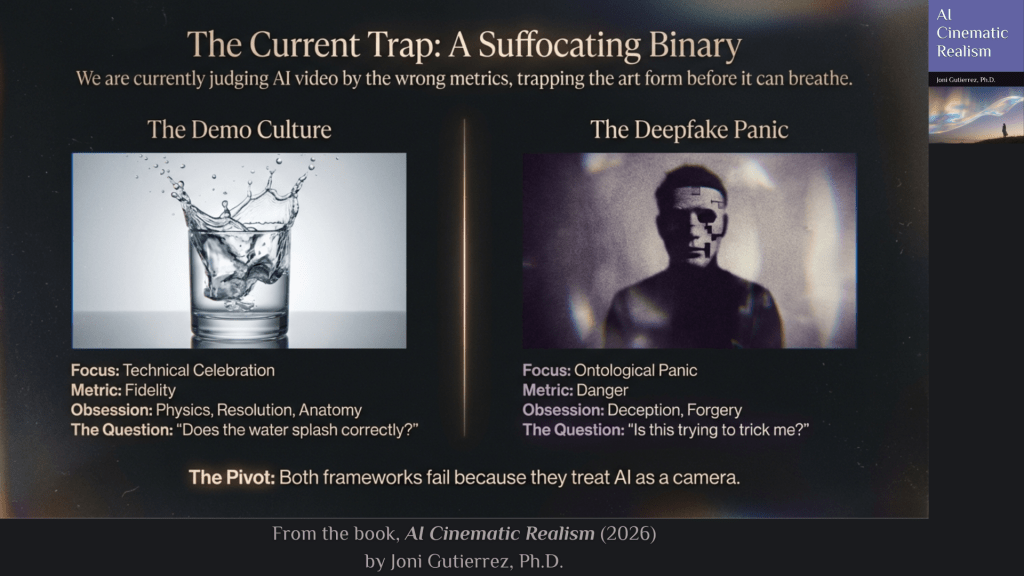
The Current Trap — A Suffocating Binary
Across today’s media landscape, AI‑generated images are trapped in a narrow binary. On one side, technical celebration—a fixation on fidelity, physics, and polish. On the other, ontological panic—the fear that every synthetic image is an act of deception. Both frameworks assume AI is a camera, and both fail to describe what is actually happening.
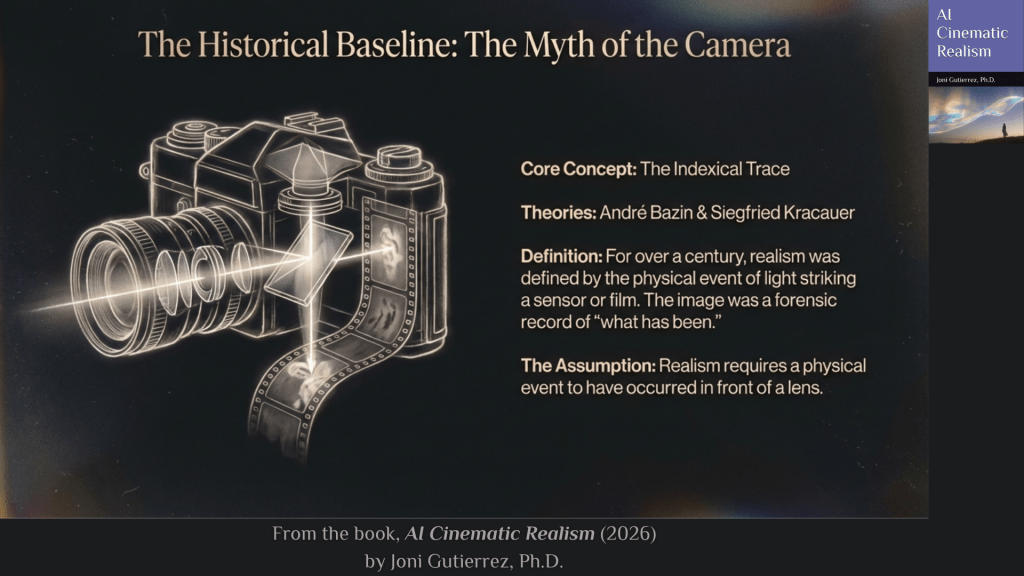
The Historical Baseline — The Myth of the Camera
For more than a century, cinematic realism was grounded in a simple belief: light strikes a surface, and the image becomes a record of the world. This “indexical trace” shaped the entire philosophy of photographic realism. Realism was tied to a physical event in front of a lens.
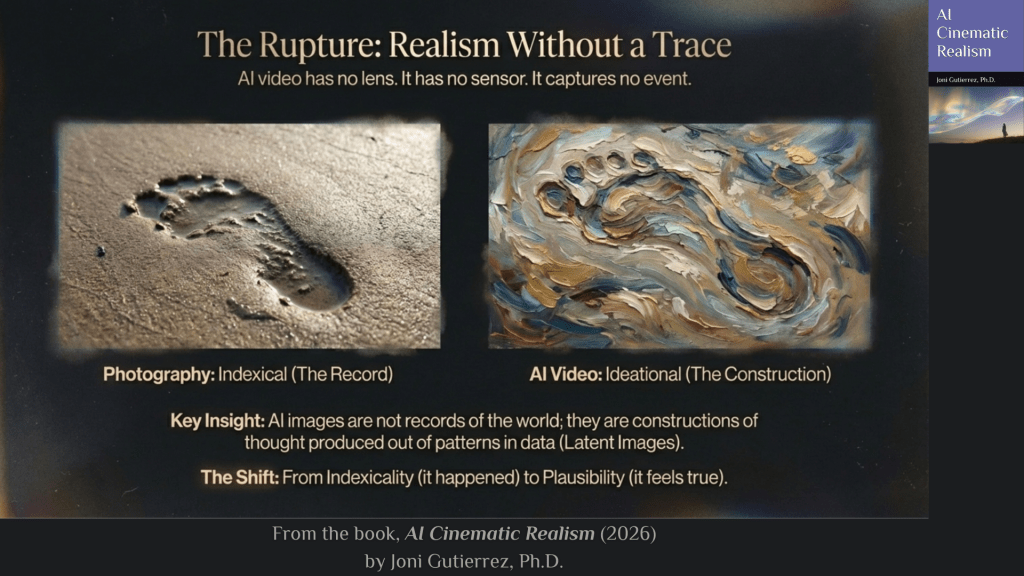
The Rupture — Realism Without a Trace
AI breaks this foundation. There is no lens, no sensor, no captured moment. AI images are not records—they are constructions. They emerge from patterns in data, not from the presence of the world. Realism shifts from indexicality to plausibility: not “it happened,” but “it feels true.”
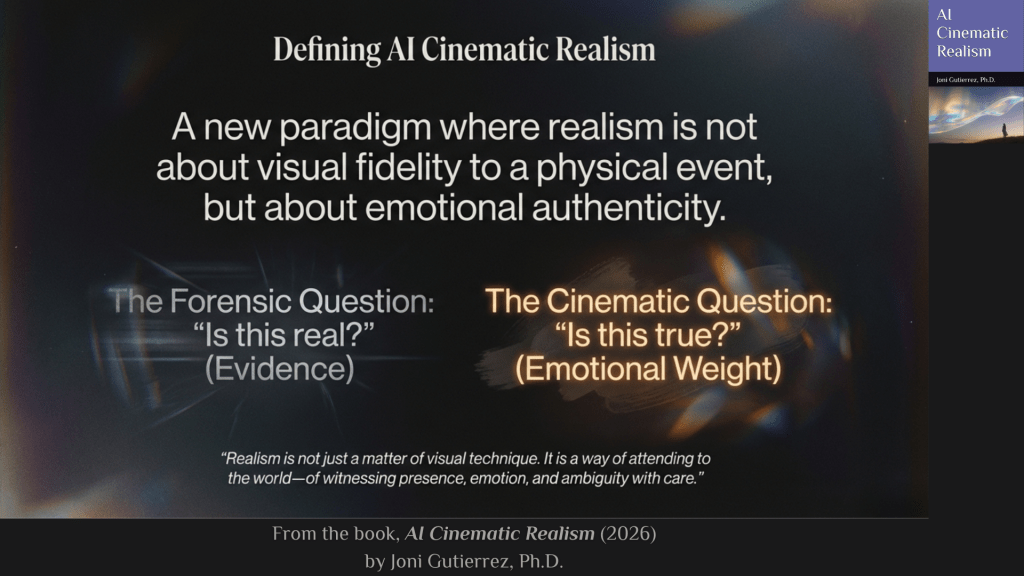
Defining AI Cinematic Realism
This shift reframes the central question. The forensic question—“Is it real?”—belongs to photography. The cinematic question—“Is it true?”—belongs to storytelling. Realism becomes a matter of emotional weight, not physical evidence.
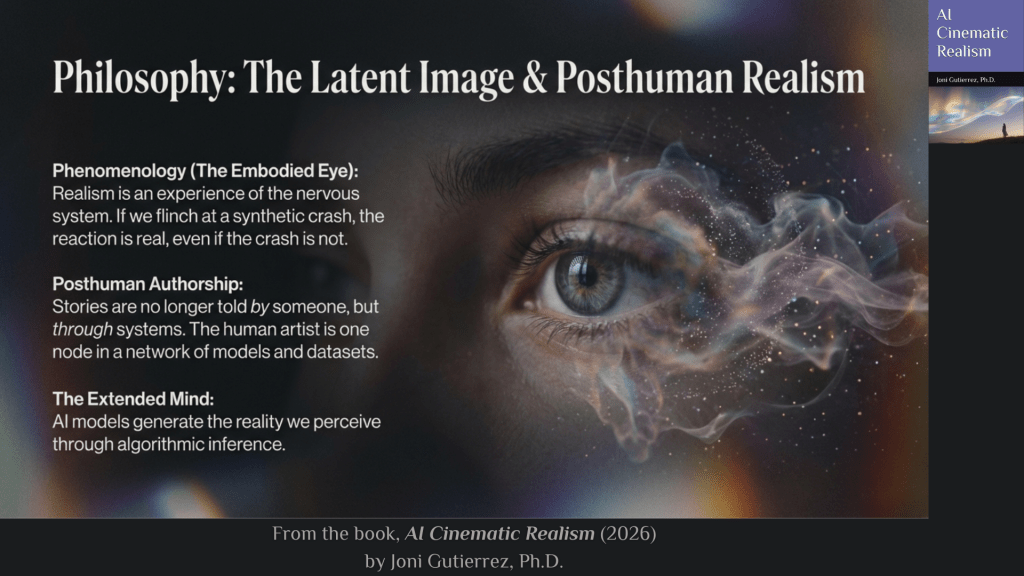
Philosophy — The Latent Image & Posthuman Realism
AI realism is grounded in perception, not provenance. Phenomenology reminds us that realism is felt in the body: if we flinch at a synthetic crash, the reaction is real, even if the event is not. AI extends this idea, generating images that shape how we think and feel—not by recording the world, but by constructing it.
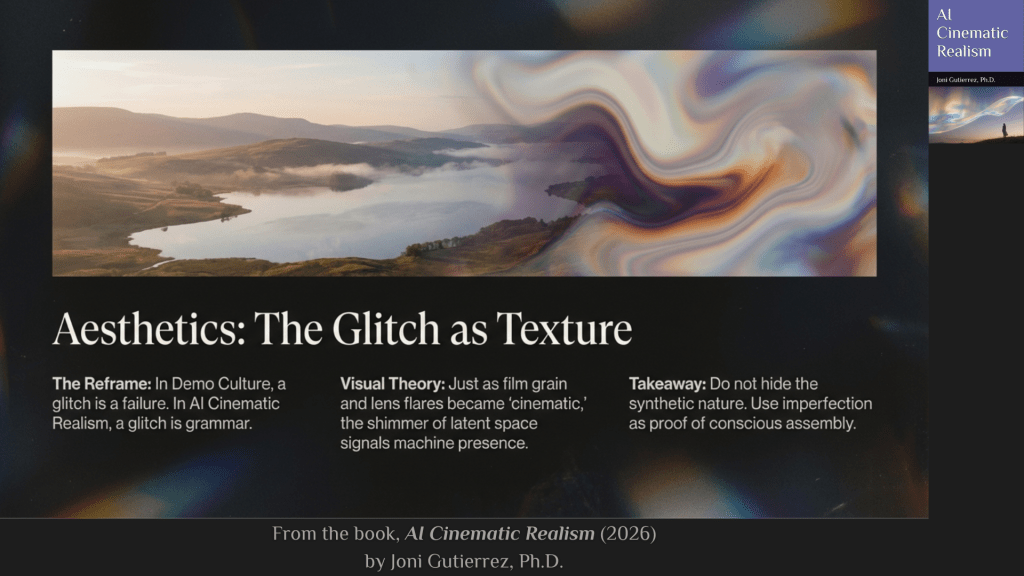
Aesthetics — The Glitch as Texture
In traditional filmmaking, imperfections like grain or lens flares became signatures of the medium. In AI Cinematic Realism, the glitch plays a similar role. What demo culture calls a failure becomes texture—a sign of machine presence, a reminder that the image is assembled, not captured.
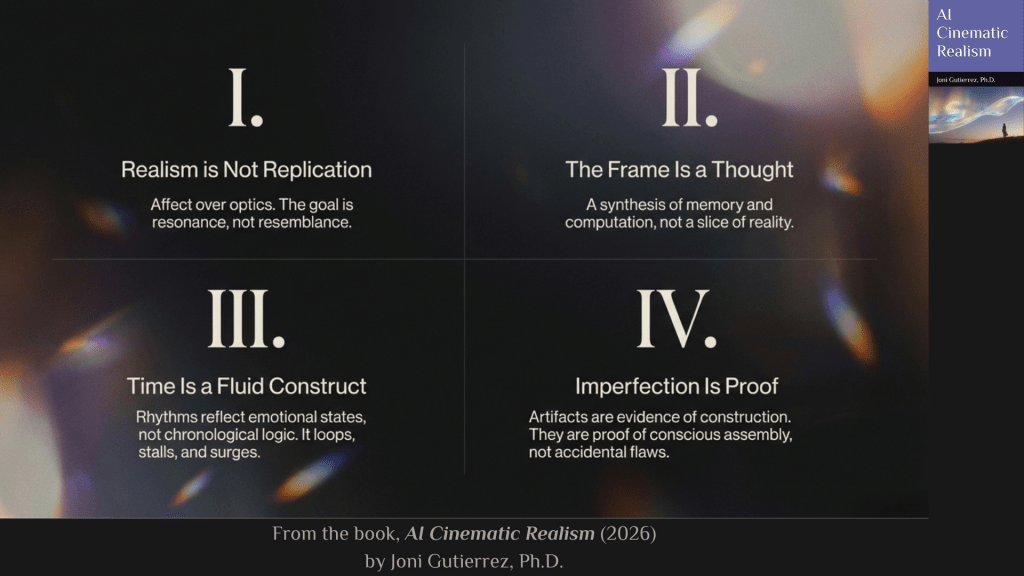
Principles I–IV
AI Cinematic Realism reframes how images mean. Realism is not replication—it is resonance. The frame is not a slice of reality—it is a thought. Time is not fixed—it is emotional. And imperfection is not a flaw—it is proof of conscious assembly.
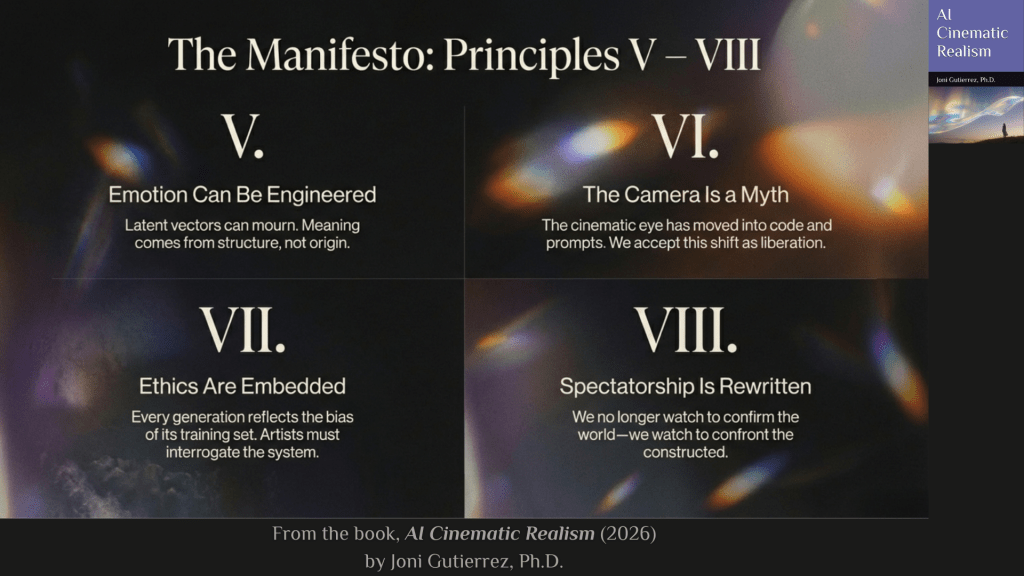
The Manifesto — Principles V–VIII
The manifesto extends the framework of AI Cinematic Realism into four additional principles. Emotion can be engineered, because meaning emerges from structure rather than origin. The camera is a myth, as the cinematic eye now lives in code and prompts rather than glass and light. Ethics are embedded, since every generated image reflects the biases and histories of its training data. And spectatorship is rewritten: we no longer watch to confirm the world—we watch to confront the constructed.
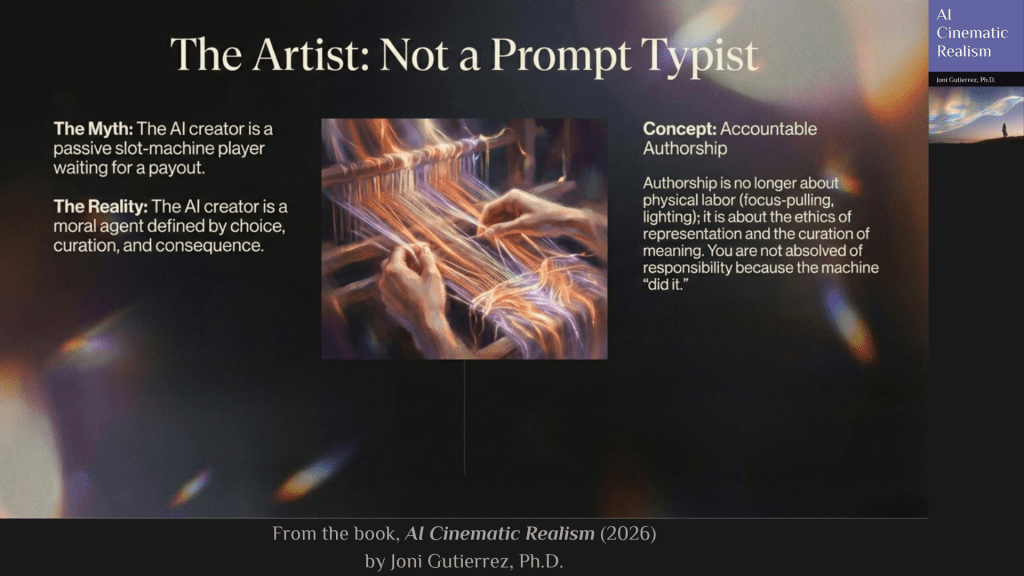
The Artist — Not a Prompt Typist
AI Cinematic Realism rejects the myth of the passive AI creator. The artist is not a prompt typist waiting for a machine to deliver results, but a moral agent whose authorship is defined by choice, curation, and consequence. Authorship shifts from physical labor to ethical responsibility: the creator must interrogate representation, intention, and impact. The machine does not absolve the maker; it amplifies the stakes of their decisions.
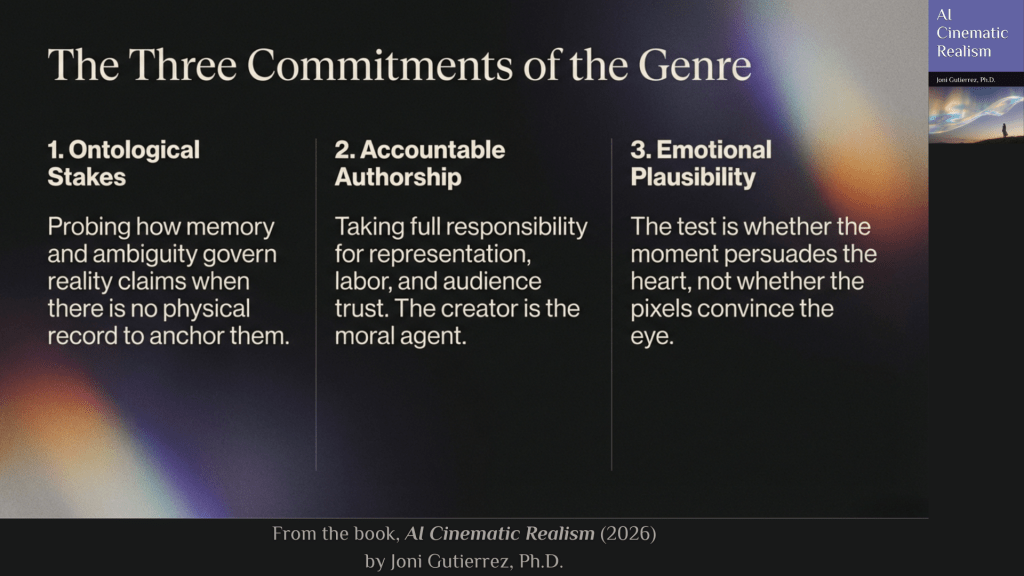
The Three Commitments of the Genre
Three commitments define AI Cinematic Realism. Ontological stakes: understanding what a fabricated image must mean when no physical record anchors it. Accountable authorship: recognizing that the creator is responsible for representation, labor, and audience trust. Emotional plausibility: evaluating realism not by whether pixels convince the eye, but by whether the moment persuades the heart.
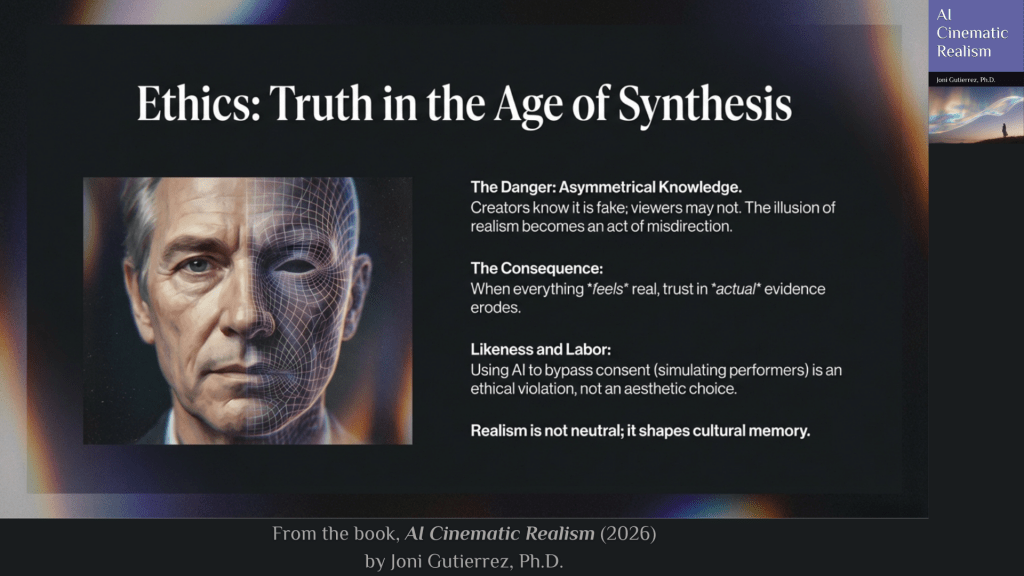
Ethics — Truth in the Age of Synthesis
Synthetic media introduces new ethical risks. Creators know an image is fabricated; viewers may not. When everything feels real, trust in actual evidence erodes. Using AI to bypass consent or simulate likeness is not an aesthetic choice—it is an ethical violation. Realism is never neutral; it shapes cultural memory and influences how societies remember, believe, and act.
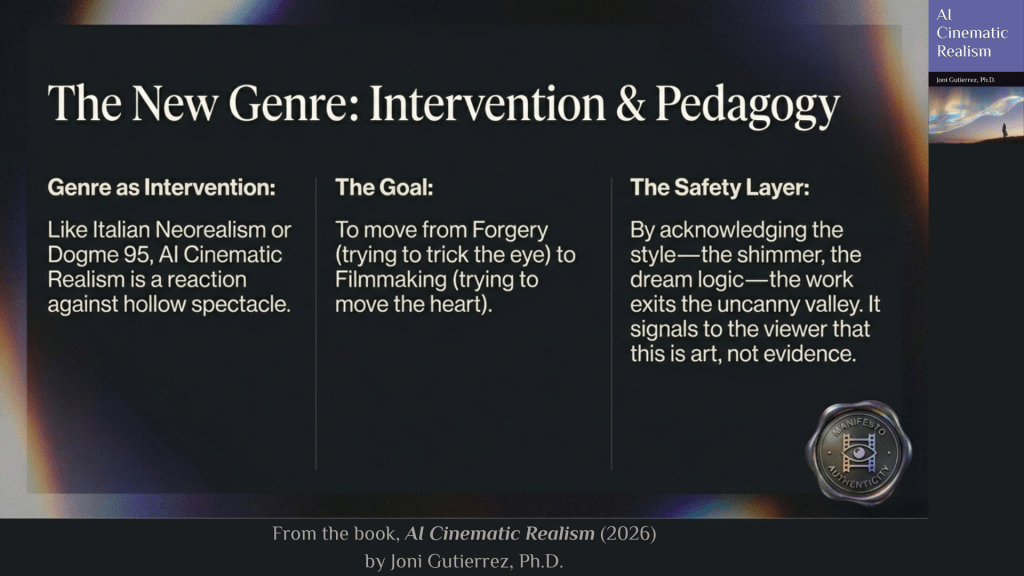
The New Genre — Intervention & Pedagogy
AI Cinematic Realism positions itself as a genre of intervention. Like Italian Neorealism or Dogme 95, it reacts against hollow spectacle. Its goal is to move from forgery—trying to trick the eye—to filmmaking, trying to move the heart. By acknowledging the shimmer, the dream logic, and the synthetic texture, the work exits the uncanny valley and signals clearly to the viewer that this is art, not evidence.
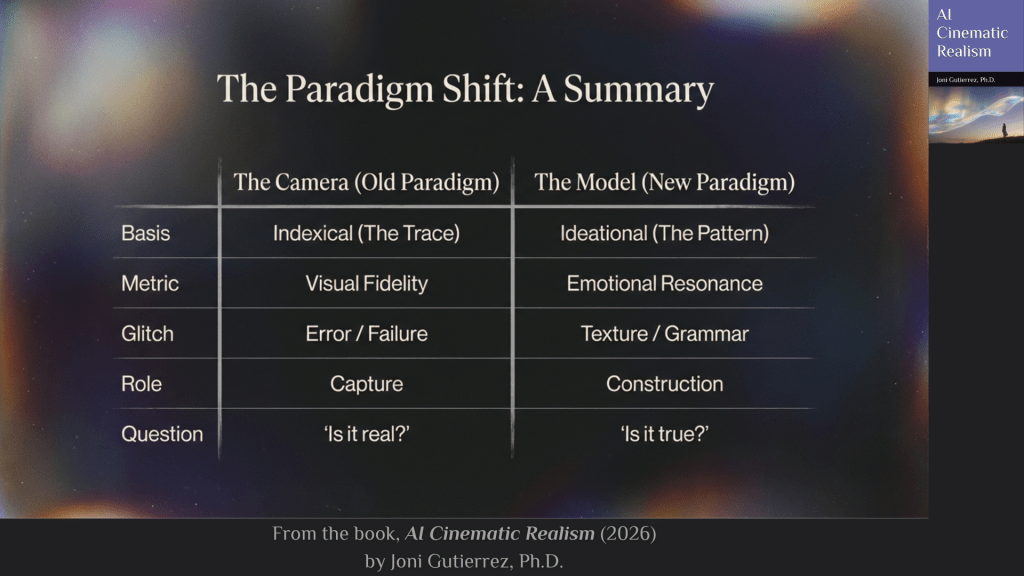
The Paradigm Shift — A Summary
The shift from camera to model marks a new paradigm. The basis moves from indexical trace to ideational pattern. The metric shifts from visual fidelity to emotional resonance. The glitch becomes grammar rather than error. The role moves from capture to construction. And the guiding question evolves from “Is it real?” to “Is it true?”
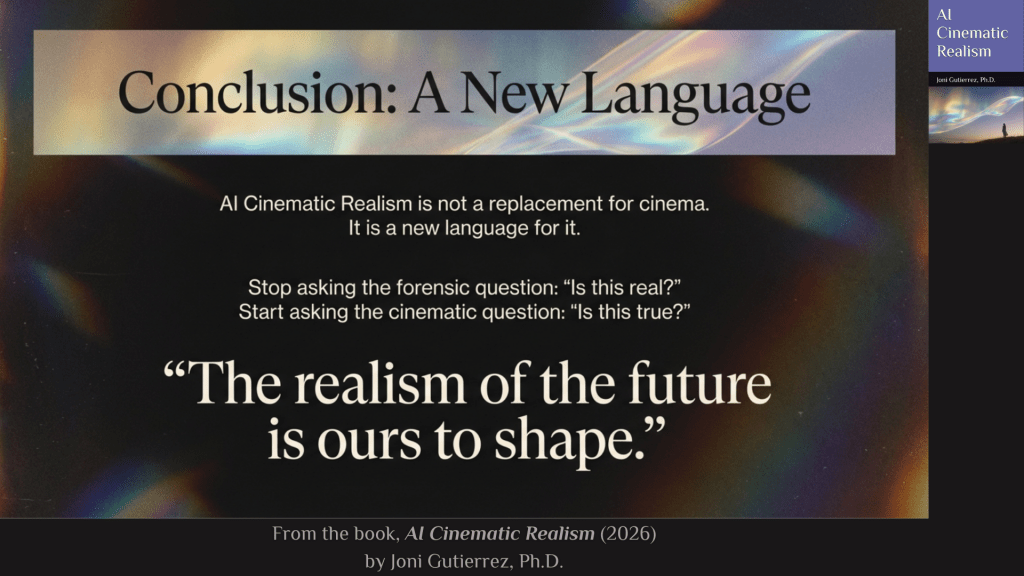
Conclusion — A New Language
AI Cinematic Realism is not a replacement for cinema. It is a new language for it. A language that asks us to stop demanding photographic truth from a medium that does not possess it—and to start seeking cinematic truth instead. The realism of the future is ours to shape.
Continue the Journey
The concepts explored here are just the beginning. To dive deeper into the aesthetics, ethics, and philosophy of the post-camera image, you can find the full text of AI Cinematic Realism (2026) available in both paperback and Kindle editions on Amazon.

 Joni Gutierrez, Ph.D.
Leave a comment