
This article is Part 6 of an eight-part series, The Ideational Frame: Drawing from Cinematic DNA for AI Cinematic Realism, designed to bridge classical film theory with the frontier of synthetic media. This series is a call to return to the core of cinema’s specificity—the rigorous craft of staging and cinematography—to open up new possibilities for the art and practice of generative AI media.
In the shift toward AI Cinematic Realism, the filmmaker’s choice of “lens” is no longer a physical attachment to a camera body, but a profound decision regarding the psychological and spatial relationship between the subject and the spectator. By applying the historical logic of optics to the latent space, the filmmaker can manipulate the perception of depth and distance to serve the narrative’s emotional core.
The Wide-Angle Perspective: Immersion and Depth
A wide-angle lens is defined by its broad field of view, which has the effect of expanding the sense of space within the frame. This optical choice is vital for grounding the viewer in a specific environment.
Enhanced Depth
Distant objects appear much smaller, which heightens the perception of movement toward or away from the lens.
The Feeling of Being “In”
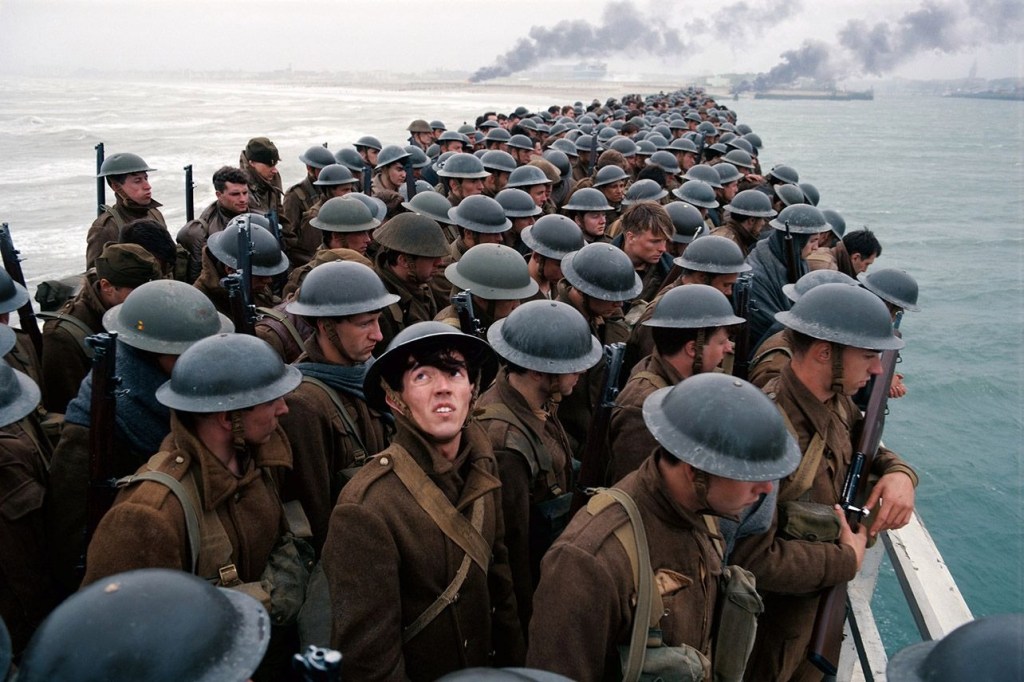
As seen in Alfonso Cuarón’s Roma (2018) and Christopher Nolan’s Dunkirk (2017), this enhanced sense of depth gives the viewer a greater feeling of being physically present in the scene.
Telephoto Compression: Intimacy and Abstraction
In contrast, telephoto lenses have a narrow field of view and have the effect of compressing space. This reduces the apparent distance between objects, often resulting in a flatter, more abstract image.
Psychological Space
In Steven Spielberg’s Saving Private Ryan (1998), telephoto compression is used to render a “closely knit psychological space” among the characters.

Focusing Intent
By flattening the background, the filmmaker can isolate a subject, ensuring the spectator’s attention is undisturbed by the surrounding environment.
Springboard: Authoring the Latent Lens
In the latent space, the “lens” is a simulated perspective that can defy the limitations of physical glass. AI filmmakers can use these optical principles to manifest internal states:
- Focal Transitions: A shot might begin with a wide “Roma” perspective to establish isolation and subtly transition into a compressed telephoto space within a single generative flow to represent a character’s rising claustrophobia.
- Non-Physical Focus: The AI filmmaker can “conjure” a frame where the depth of field is dictated by emotional importance rather than distance—keeping two characters in sharp focus even if they are physically far apart in the generated geometry.
By mastering the psychology of the lens, the practitioner of AI Cinematic Realism ensures that the synthetic world carries the weight of a lived experience. The goal is to move the heart by applying traditional cinematographic reasoning to a medium that has no physical bounds.

 Joni Gutierrez, Ph.D.
Leave a comment